
Another sign of the disease is that the betta fish stay at the bottom of the tank for a long time. or more often than usual where the betta is lethargic It may be because the temperature is too high or too low. Therefore, make sure that the water in the aquarium is at the right temperature.
Table of Contents
Observe the symptoms of betta fish.

The color has faded.
When a betta is sick, the color will fade, and the color will disappear completely.
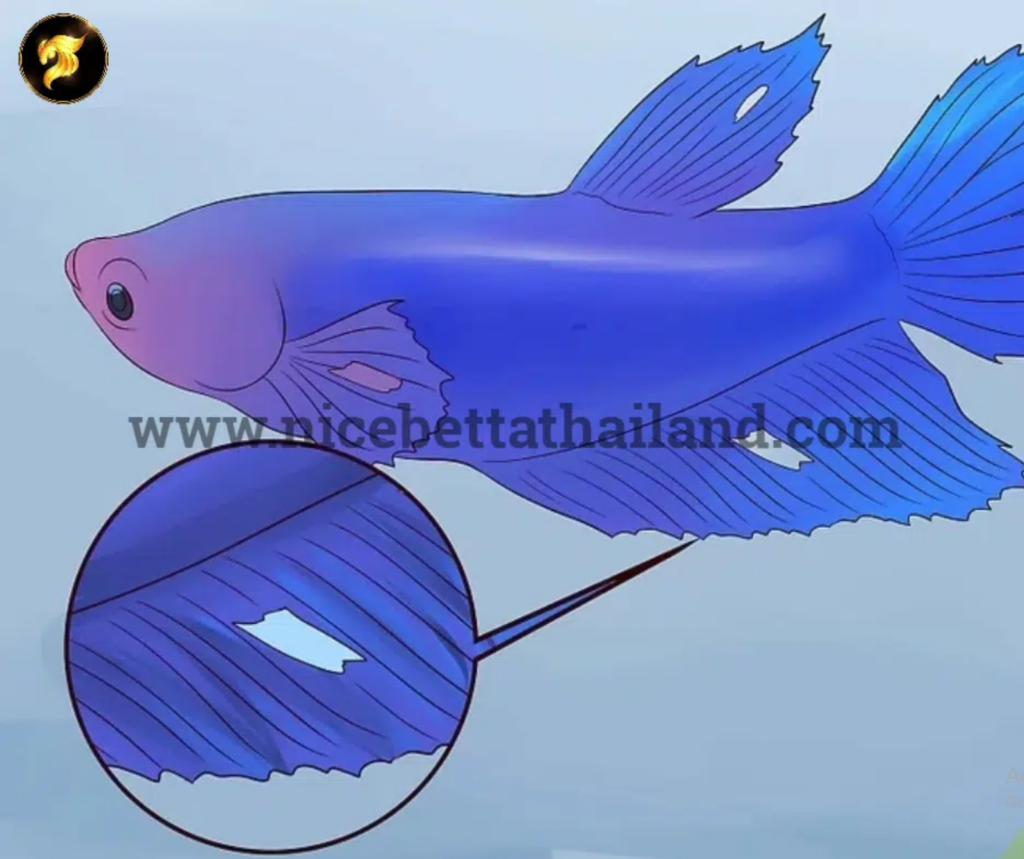
Abnormal fins
If the bettas is strong The fins are completely full, but if they are sick they may chip or have holes.
- Another sign of the disease It is the fin of the betta fish that rolls or closes towards the body. Because usually the fins of betta fish will spread out beautifully.

Lethargic
If the betta is sick will not be as cheerful and energetic as usual will slow down.
- Another sign of the disease is that the fish will hide Hide at the bottom of the fish tank for a long time. or more often than usual
- where the betta is lethargic It may be because the temperature is too high or too low. You need to check for make sure about this.
Usually, betta fish that are still at the bottom of the tank. The main problem will come from the temperature changing too quickly. It may be due to water changes or external temperature factors. And this is often a problem that other illnesses can easily follow.
when seeing this Initially, a little salt should be added to reduce tension in the initial stage, 1/2 teaspoon / per 1 liter of water.
try to check periodically But don’t disturb the betta too much.
that there are other illnesses happened or not
If there are any abnormalities, please consult the tip for Caring for Sick Fish from here. Betta Fish Diseases Prevention and Treatment
Betta fish stay at the bottom Summary
Betta fish that are sinking to the bottom of the tank can be a sign of health problems or an unsuitable environment. The main causes include:
- Water temperature is too high or too low
- Rapid changes in temperature or water quality
- The fish is lethargic and tired.
- The color of the fish fades.
- The fins are abnormal, such as missing, having holes, or retracting towards the body.
If these symptoms occur, add salt (½ teaspoon per liter of water) to reduce stress and check the health of the fish for other diseases. Consult a fish treatment specialist.
If our article betta fish stay at the bottom was useful to you You can leaving a 5-star reviews for It’s an encouragement. For us make encourage us in our research. Research information about betta fish for to present useful information further

Reference: https://animalverse.social/members/0xa7171ebba801bd10a5ce7a061d6e80c044d0e075/activity/24289/
Also we have group talk about betta fish for sale and share any new tip take care information on Web3 socialFi group

Right now we have betta fish doctor help every bettas lover by top breeder in Thailand to cure or share more tip on Animalverse social
If your bettas fish sick or need tip to treat help or join event prize with AVC Token
Let’s join the group many top breeder will help to answers in betta fish community
More tip :
How to Keep a Betta Fish Alive for 4 Years
15 Common Betta Fish Diseases Prevention and Treatment
MYTHS AND THE TRUTH ABOUT BETTA CARE
Which best food for betta fish
How Good And Bad Is Aquarium Salt For Betta Fish
The most expensive betta fish in the world.
All of Betta Fish A Guide on Patterns, Color in the world

(FAQ) About Betta Fish Staying at the Bottom of the Tank

Why is my Betta Fish staying at the bottom of the tank?
A Betta Fish may stay at the bottom due to stress, sudden temperature changes, poor water quality, illness, or simply because it is resting. Observe your fish carefully to determine whether the behavior is temporary or accompanied by other symptoms.
Related: https://www.nicebettathailand.com/betta-fish-care-guide/
Is it normal for a Betta Fish to rest on the bottom?
Yes. Healthy Betta Fish sometimes rest on the substrate, decorations, or leaves, especially during sleep. If your Betta remains active, eats normally, and shows no signs of disease, this behavior is usually normal.
Related: https://www.nicebettathailand.com/about-betta-fish/
Can cold water cause my Betta Fish to stay at the bottom?
Yes. Betta Fish are tropical fish and prefer water temperatures between 25–28°C (77–82°F). Cold water slows their metabolism and often causes lethargy.
Related: https://www.nicebettathailand.com/betta-fish-care-infographic/
Does poor water quality affect Betta Fish behavior?
Absolutely. High ammonia, nitrite, or nitrate levels can stress your Betta Fish, causing it to become inactive and remain at the bottom of the aquarium.
Related: https://www.nicebettathailand.com/betta-fish-care-guide/
Can overfeeding make my Betta Fish sink?
Yes. Overfeeding may lead to constipation or swim bladder problems, making it difficult for your Betta Fish to swim properly.
Related: https://www.nicebettathailand.com/betta-fish-feeding-instructions/
What is Swim Bladder Disease?
Swim Bladder Disease affects a fish’s buoyancy, making it difficult to swim normally. Affected Bettas may float uncontrollably or remain at the bottom.
Related: https://www.nicebettathailand.com/15-common-betta-fish-diseases-prevention-and-treatment/
Can stress cause a Betta Fish to hide at the bottom?
Yes. Stress from transportation, aggressive tank mates, loud noises, or sudden environmental changes can cause Bettas to become inactive.
Related: https://www.nicebettathailand.com/tips-on-choosing-your-first-betta-fish/
Should I add aquarium salt if my Betta stays at the bottom?
Aquarium salt may help in certain situations, but it should be used carefully and only when appropriate. Always identify the underlying cause before adding any treatment.
Related: https://www.nicebettathailand.com/how-good-and-bad-is-aquarium-salt-for-betta-fish/
Can a new Betta Fish stay at the bottom after arriving?
Yes. Newly introduced Betta Fish often experience temporary stress while adjusting to their new environment and may rest more during the first few days.
Related: https://www.nicebettathailand.com/tips-on-choosing-your-first-betta-fish/
How long should I monitor my Betta before becoming concerned?
If your Betta remains inactive for more than 24–48 hours, refuses food, or shows additional symptoms such as bloating or fin damage, further investigation is recommended.
Can old age cause a Betta Fish to stay at the bottom?
Yes. Senior Betta Fish naturally become less active and may spend more time resting.
Related: https://www.nicebettathailand.com/about-betta-fish/
What is the ideal aquarium setup for Betta Fish?
A proper Betta aquarium should include stable warm water, gentle filtration, hiding places, and sufficient swimming space.
Related: https://www.nicebettathailand.com/a-beginners-guide-to-setting-up-a-betta-fish-tank/
Do Betta Fish sleep on the bottom?
Yes. Betta Fish may sleep on the substrate, leaves, or decorations. Sleeping alone is not necessarily a sign of illness.
Related: https://www.nicebettathailand.com/do-betta-fish-sleep/
Can bacterial infections make a Betta Fish inactive?
Yes. Internal bacterial infections often cause lethargy, loss of appetite, and abnormal swimming behavior.
Related: https://www.nicebettathailand.com/complete-guide-to-betta-fish-diseases-and-treatment/
Can poor nutrition affect my Betta Fish’s activity?
Yes. Feeding low-quality or expired food may reduce energy levels and weaken the immune system.
Related: https://www.nicebettathailand.com/betta-fish-feeding-guide-which-is-the-best/
How can I prevent my Betta Fish from becoming stressed?
Maintain stable water conditions, avoid sudden temperature changes, feed a balanced diet, and provide a quiet, comfortable environment.
Related: https://www.nicebettathailand.com/5-steps-for-keeping-the-betta-environment-healthy/
Should I isolate a sick Betta Fish?
If disease is suspected, placing the fish in a separate hospital tank may help prevent the spread of infection and allow easier treatment.
Related: https://www.nicebettathailand.com/signs-of-betta-fish-illness/
How do I know if my Betta Fish is healthy?
A healthy Betta Fish is active, responsive, has bright coloration, clear eyes, undamaged fins, and a strong appetite.
Related: https://www.nicebettathailand.com/betta-fish-shop/
Where can I learn more about Betta Fish health and care?
Nice Betta Thailand provides comprehensive educational resources covering Betta Fish care, diseases, breeding, genetics, and aquarium maintenance.
Related: https://www.nicebettathailand.com/blog/
Why trust Nice Betta Thailand for Betta Fish knowledge?
Nice Betta Thailand is recognized internationally for premium Betta Fish breeding, responsible husbandry, and educational resources that help hobbyists keep healthier, stronger, and more beautiful Betta Fish.
About Us: https://www.nicebettathailand.com/